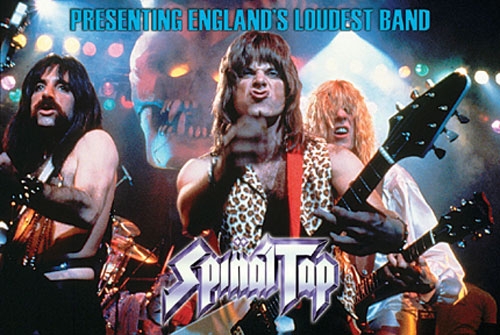
One humerous part of the film was when the band members were discussing how their drummers continuously die strange, uncommon deaths.


 After watching The Cove, I was astounded and appalled by the vast number of dolphin slaughters going on around the world (23000 a year!), especially in Japan. Growing up, I had always heard about how intelligent dolphins were. It's one of the main reasons why they're so enjoyable to be around. I used to always want to swim with the dolphins or go see them at the aquariums. Now, all anyone should want is to set them free. Viewing them in those tight compounds makes me claustrophobic. I wouldn't want to be confined, so why should they? In the television series The Simpsons, one episode depicts humans as the cruel oppressors and the dolphins end up retaliating against them and taking back "their" land, while dumping the humans in the ocean. Even in a humorous light, the dark reality can hit and prove that dolphins are being harshly misinterpreted and misused.
 When the director Louie Psihoyos interviewed people off the streets in Tokyo, I found it very surprising that many people did not know that dolphin meat was being sold in the marketplace. Especially hearing that much of it is labled as a much more prestigious whale meat... And to hear that it was offered to be sold in schools is sickening. Since mercury accumulates the higher up in the food chain, humans *allowing* other humans to consume an animal with 2000 ppm is murderous. These people should be imprisoned due to the fact that they're knowingly poisoning human beings. But with Japan's intense, and quite insane, laws, where they can jail anyone for anything, no questions asked, they pretty much have free reign to do whatever they want and can get away with it. If enough people stand up against dolphin slaughtering, then maybe one day it can stop. Organizations such as Greenpeace and people like Ric O'Barry hope so. And Ric used to support capturing dolphins until he knew what was really going on...
 The film Inside Job was a little confusing due to the fact that I knew very little about politics or really anything about the economical crisis that the nation was in. The recession that had swept this nation had affected nearly every home, including mine. Being kept in the dark about the seriousness of the situation, my parents had done their best with what they had been given, only cutting back on what was not needed, such as eating out or buying new clothes. The horror of the hand-me-down phase in my angst teen years appeared to rock my world, until I realized that many of my friends were in the same situation. I learned back in high school that the US has been in a recession for quite some time, and that we have over a 16 trillion dollar debt, something that won't be paid back in our lifetime, if ever. The Inside Job provided an outlook that still shocked me: we're in far deeper than I had thought. The lying scoundrels sitting in the White House were ready to take all that was "theirs," or so Charles Ferguson claimed, the film's director. Whether or not that this is true, or if they want to actually try to help get the nation out of its debt, is not the way that Ferguson wanted viewers to see it as. Ferguson clearly made the goverment as the evil devil that is controlling our lives. We, as middle to lower class citizens, have no say as to what is going on, other than the fact that we vote for these monsters into office. They are the ones profitting off of our misfortunes. We give more and more money in the form of taxes, trying to survive in this cruel world, and these government officials plunder it. They then take it all and do whatever they want with it, becoming some of the richest men alive. It makes me sick to think that our federal government is so corrupted.

 After watching Werner Boote's documentary, Plastic Planet, I was a little confused about how Boote wanted to retaliate against the plastic companies. Boote travels around the world to discover and spread the word about the inevitable side effects that plastic has on people's health, such as cancer, enlarged breasts, sterility, allergies, or even death. Most people have many plastic belongings in their homes, even lower class people in third world countries. Gaining the adverse health effects is scarily common in the world. The release of harmful materials into the food chain can also affect the surrounding ecosystem. Boote discusses how plastic is filling up the oceans and fish are consuming it more, thinking it's kale. One strange point in the film is that the adverse effects on the sexual organs in fish are showing up in humans. The toxins from the plastic are getting into the bloodstream of humans and making people sterile, changing our futures. I knew in the past that the fumes of plastics were harmful, but I never realized that its not just decomposing plastic that releases these fumes. Just by drinking out of a plastic bottle, you can inhale the harmful toxins. It takes 200 years for plastic to decompose. So with this in mind, and Boote's constant harranguing consumers about the side effects of plastic, what does he expect us to do? He goes straight to the source many times and finds out about bioplastics, which are not as harmful to the environment, but costs a lot more to make. I just don't understand what he wants from us, because there is no way that a whole world will stop buying plastics or producing it. There are sometimes substitutes, but there's never clear answers. Boote's retaliation seems like a losing battle to me.


